
IS CONTEMPORARY ROMANCE DEAD?!!
According to Threads discourse, it is.


Hi. Hello. Welcome. Happy February. It’s the month of love, and apparently, contemporary romance is trending on threads—for being DEAD.
RIP, romance genre. It was nice knowing you, I guess. (but what about the readers? What about my debut? What about our dreams?)
JK. Let’s actually wade into this, and dissect it.
First things first: I can’t even find the original post that sparked this discussion, but like all things on the internet, one person made an innocent comment. Then, the internet does what the internet does and played the game of telephone until none of it even makes sense anymore.
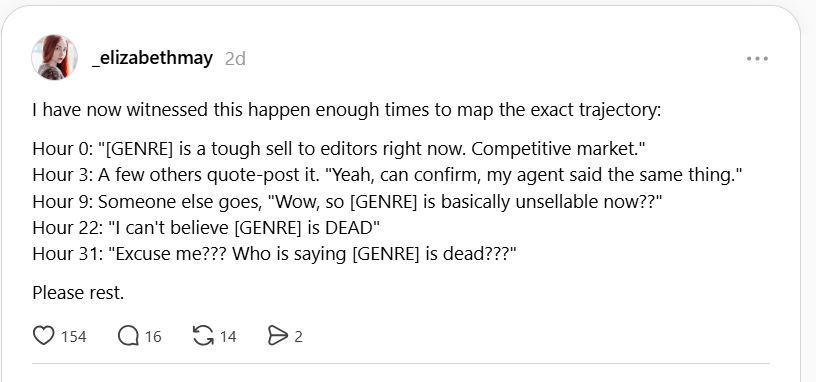
I’ve seen everything from: editors aren’t buying, readers are still buying plenty of romance, it’s because self-pub and indies are surging, contemp. romance still dominates the market and the NYT page so clearly it can’t be dead, the genre is so saturated nothing will get through unless it’s speculative, omg panic it’s DEAD, and actually you’re all morons because it’s thriving.
Okay.
Well.
Here’s what I, Kelly Beck, contemporary romance author who’s been playing in the traditional publishing game for a hot minute now, think on the subject.
I have been told for about two years, by agent and editors alike, that contemporary romance is over-saturated and it’s hard for a debut to “break out in a crowded market.” (How many of you on submission just now had a full body cringe at that wording?) I believe, without seeing it, that the original post was speaking more to that specific situation: editors are not buying much debut contemporary romance right now and/or being extremely picky about it.
And others on threads have said the same thing:
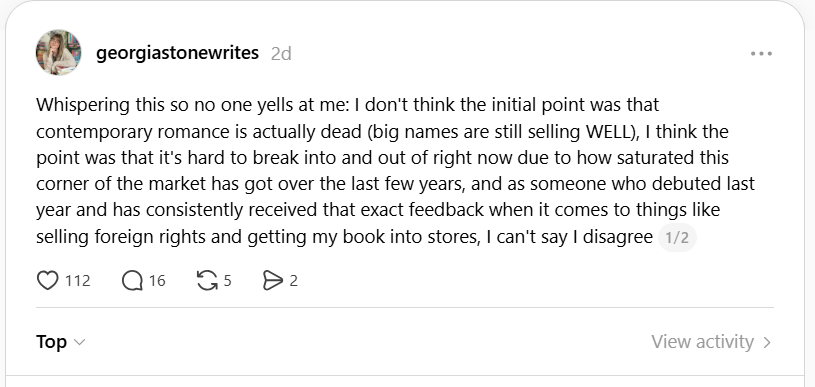
It is, objectively, hard to break into the trad pub market as a debut without an audience or a successful self-publishing career in the contemporary romance space right now. Now, please note I said hard not impossible.
Part of that is because it is over-saturated, meaning there’s a lot of very talented people writing in the genre, a lot of self-published authors killing the game and landing trad pub deals, and some star NYT bestsellers who crank out amazing books every year (BK Borrison, Lyla Sage, Ali Hazelwood, Carley Fortune, Emily Henry, Abby Jiminez, etc).
“But Kelly, look at all those readers still gobbling up the genre! That means it’s booming, not dying!”
Right. But what that means for YOU, as an author, is you are competing for a space among that already very talented, saturated list. Is a reader going to take a chance on you, an unknown debut, amongst those tried and true favorites? Maybe! But editors have to look at that, and that means their decision has to be because they absolutely think they can make your book stand out among an already crowded bookshelf.
Quite literally, imagine a bookshelf with ALL those books on it. Does yours stick out among them? Or blend into the crowd?
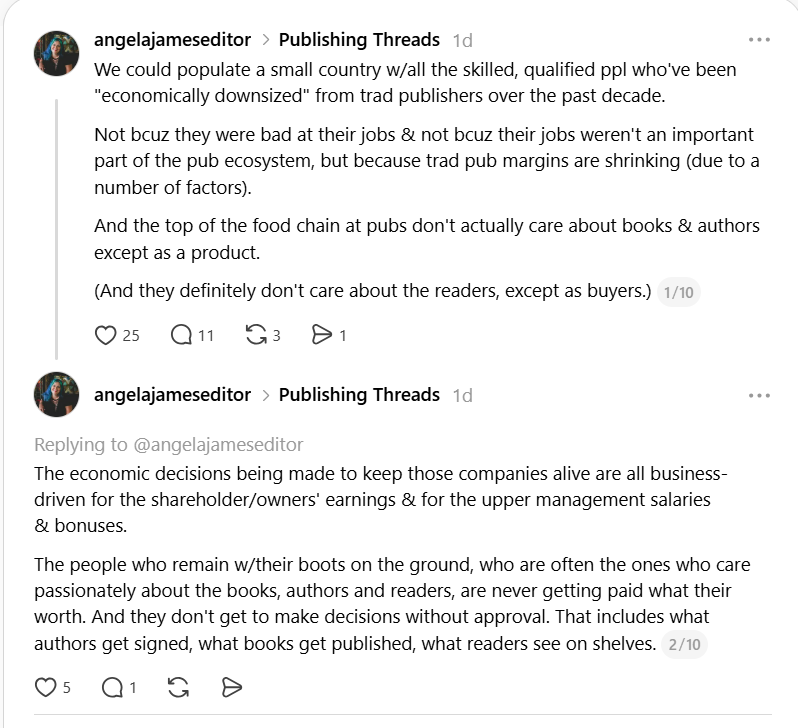
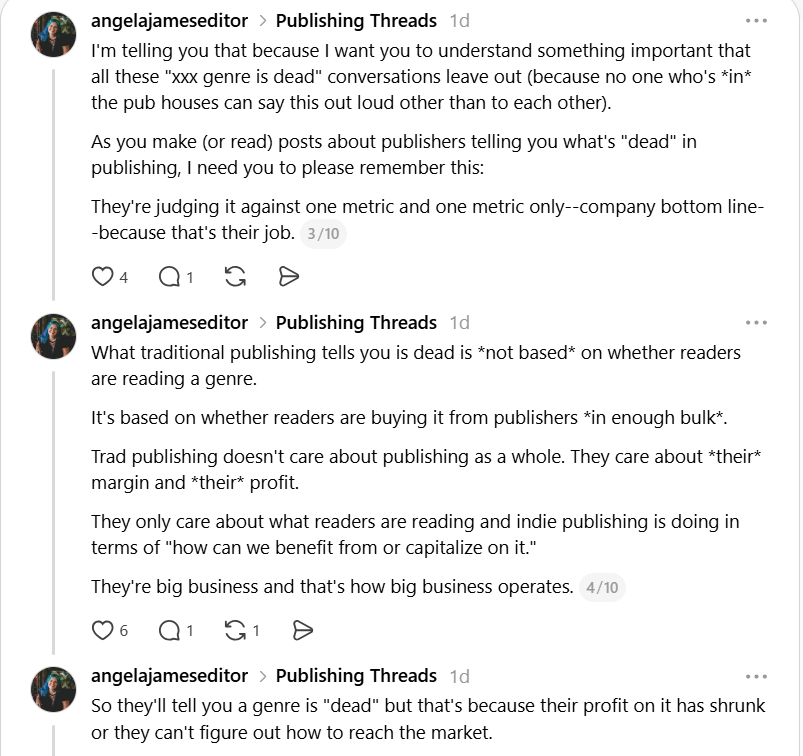
It’s also important to note the structural changes and struggles of trad pub right now. Editors are leaving left and right. Business is shifting.
Angela James explained it best:
A subject I harp on ALL THE TIME is that as authors we must have the creative/passion side of our brains, and the business side. There are business decisions to be made (agents, indie vs trad, comp titles, pitching and marketing), and passion decisions (tropes, characters, plots) to be made in this industry, especially as an author.
But, bottom line, publishing is a business. If you want to enter traditional publishing, you must think like a business owner at times (the business is your writing career).
So, what does “contemporary romance is dead” mean for you and your career?
It doesn’t mean you abandon the genre, wad up your manuscript page by page, and have a waste-basket basketball tournament.
Instead, it means taking a hard look at the state of trad pub right now. What we know for a FACT is that the market is over-saturated and over-crowded. Agents and editors are being picky.
So, your choices are this:
Write the contemporary romance of your heart, ignore all the chatter, and make it the best damn contemporary romance you can because markets shift and change, and who cares. Make it so good, they can’t say no to it.
Also though, steady yourself to know it might be a longer haul to get where you want to get with a contemporary romance right now. And that’s okay! Patience is good for you, or something.
You journey might shift to include self-publishing so you can find your readers and your audience, and take some leverage to the table.
Pivot a little: speculative romance is trending, along with paranormal and high concept, big flashy romcoms. If you have an idea like that pulling at your brainworms, maybe its the time to try and write it.
Pivot a lot and switch to horror (it’s all I see anyone asking for) lol
The goal of transparency in the publishing industry isn’t to terrify you or make you shut your dreams down. Instead, it’s to give you information to make the best decision for yourself and your career. Also, to temper your expectations. I personally appreciate knowing contemporary romance might be a harder sell right now, meaning I have to buckle in for a little longer of a journey.
But, as I said up above, markets shift and change all the time. Dragons were in a real slump before Fourth Wing came out. I had a friend who was told that reality TV rom-coms were not selling in several agent rejections last summer, then she sold in two weeks to a Big 5.
The one really sure thing about traditional publishing is it is unpredictable.
Also, arguing amongst ourselves on threads will not make it any more predictable. We also must take into consideration that people’s experiences will color their opinion on this subject.
Someone waiting on sub for the second year in a row will be more apt to say “contemp is dead” versus a NYT bestseller with a five book deal (who thinks the genre is thriving).
All of us can only speak from our experience and observations, and I truly think the “truth” is in-between those two extremes: the genre is thriving with readers, we have several well-established big names dominating (positive) the lists, and it trickles down to affect the debuts who have to be a real stand-out to wiggle their way in.
The only thing we can really do is write the next thing and do our best.
Happy Writing!
-K
This is excellent. Great information for me as an editor working with indie authors, too.